Builder Spotlight
Hagerty on How the Electromod Market Has Surged Forward
Nik Berg, writing for Hagerty, looks at how electromods have moved on from salvaged Tesla drivetrains, with Everrati, Electrogenic and Kent-based Retroelectric among the firms now building to production-EV standards.
- By
- DriveMarket Editorial
- Published
- November 23, 2026
Based on reporting by Nik Berg, Hagerty, 19 November 2026: “From Crashed Teslas to New-Build Classics: How the Electromod Market Has Surged Forward”. Read the original. This page is an own-words summary; all credit for the reporting belongs to the author and publication.
A booming, still-divisive business
The business of retrofitting electric motors to classic cars is booming, Berg writes, even if it remains a point of contention for many enthusiasts. What is sacrilege for some is, for converts, a way of making classics more usable and reliable, and of getting them out of garages and onto the roads.
The first EV swaps appeared around a decade ago, in many cases by repurposing powertrains from existing electric cars. Drivetrains from accident-damaged Teslas and Nissan Leafs were given second lives in cars designed long before the EV era. Whether by coincidence or design, rear-engined classics were often the first targets: the first vehicle from Everrati was a Porsche 911; Electrogenic opted for a VW Karmann Ghia; and at Retroelectric it was the VW Beetle.
Retroelectric and the Beetle
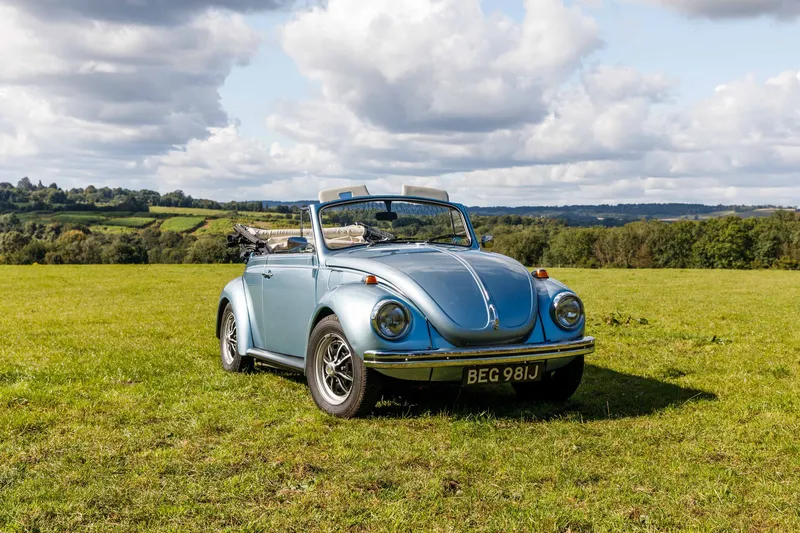
Tim Hustwayte, commercial director at the Kent company, tells Berg that the Beetle “just had a lot of things going for it. It’s one of those cars that people universally recognize, and so it made sense to be the first vehicle we tried, and it just kind of grew from there.” The firm has probably done 35-plus Beetles over the years, he says, and it is where the whole business premise began. Packaging helps: a transverse system can be built to fit in the rear.
Retroelectric’s own site, independently of the Hagerty piece, still presents the Beetle as a current conversion, from £30,000 on a client’s donor or £65,000 as a complete car — in line with the “around £30,000” Berg reports for a Beetle conversion.
From salvaged packs to new OEM parts
Retroelectric’s earliest cars kept the original transmission, Hustwayte tells Berg, and that remains an option. At Everrati, the first 911 used a Tesla motor and a single-speed transmission. Over time, Berg writes, the technology has progressed, and electromodded cars are increasingly being built with all-new components, designed to the same standards as mass-produced EVs.
Access to original-equipment systems now often means a combined gearbox and motor, Hustwayte says, which is smoother if the client wants refinement — but Retroelectric still offers a classic gear-change for those who want it, as well as the direct-drive systems that now make up more of its work. Batteries have changed too: when the company started it was using reclaimed modules; more and more, he says, it uses brand-new, grade-one automotive battery technology, in smaller, more power-dense packs.
Unlike the mainstream EV market, costs have not really come down, Berg notes, largely because of the labour in these builds. Retroelectric charges around £30,000 ($40,000) to convert a VW Beetle, while its latest Porsche 912 build ran to £70,000 ($92,000).
Hagerty drives a Retroelectric 912
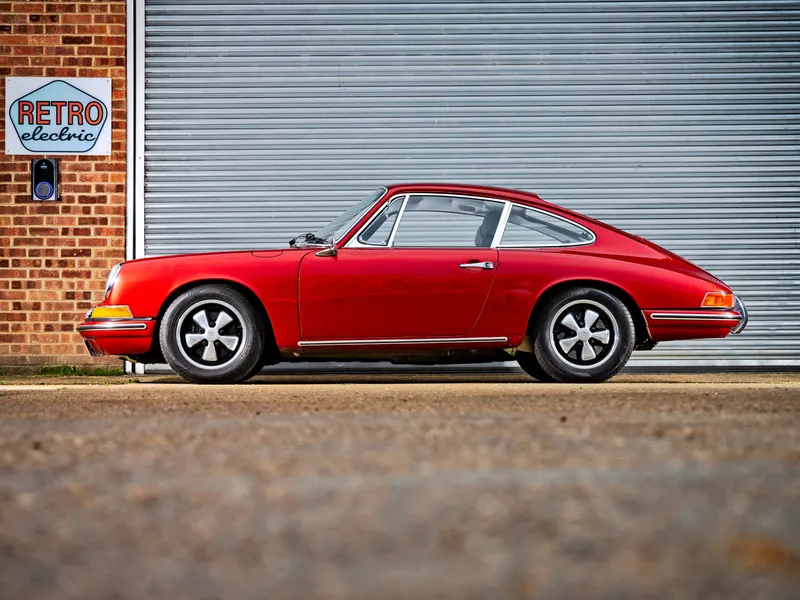
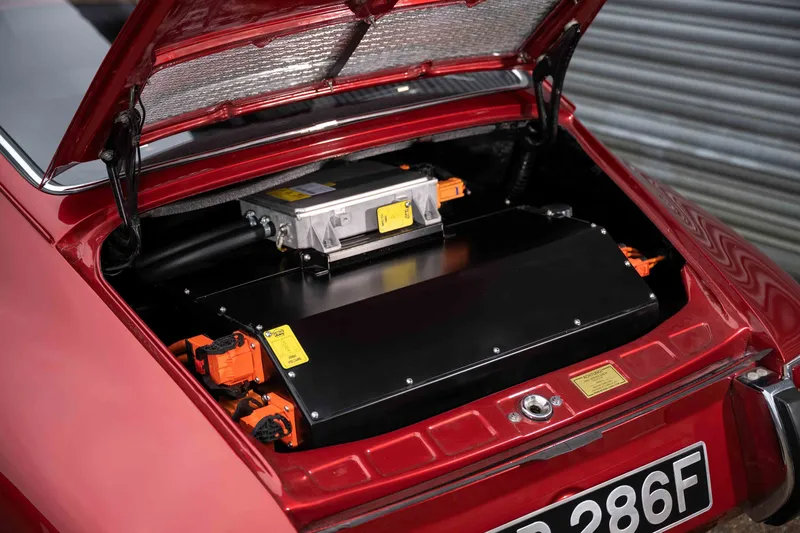
Berg describes a Porsche 912 that, from the outside, looks stock, with only a missing exhaust pipe to hint at the change. Open the engine bay and all you see is a battery box. Inside there is a small centre display for charge and gear selection; the original shifter is retained, but there are only two pedals. Hidden in the glovebox is the control panel for adaptive Tractive suspension, with five settings.
A 42 kWh battery pack is split between the rear, where the engine was, and the front, where the fuel tank used to be, which Berg says keeps the original weight balance. Surprisingly, the car is over 100 pounds lighter than before. The single motor delivers 160 kW, or 214 hp, and a range of approximately 150 miles. There is no assistance for steering or brakes except a bit of regeneration, which he says makes for a more engaging drive, with an estimated 0–60 time of under five seconds and enough torque to spin the rear wheels from a standstill or out of a slow corner.
Although this example is for sale at £150,000 ($197,000), Berg writes, there is potential to build one for less than the cost of the upcoming Cayman/Boxster EV.
Retroelectric’s showroom, as of this writing, lists a 1968 left-hand-drive 912 converted by the company and offered on behalf of a customer, at a price on application, with a 42 kWh, 16-module pack, a stated real-world range of 160 miles, CCS charging, a 200+ hp direct-drive motor and a 0–60 time of just under five seconds — close to, but not identical with, the figures Berg records, and without the £150,000 asking price. A 1965 right-hand-drive 912 is shown as out of stock. The photographs here are from the 1968 showroom listing.
Everrati: from a first 911 to a wider range
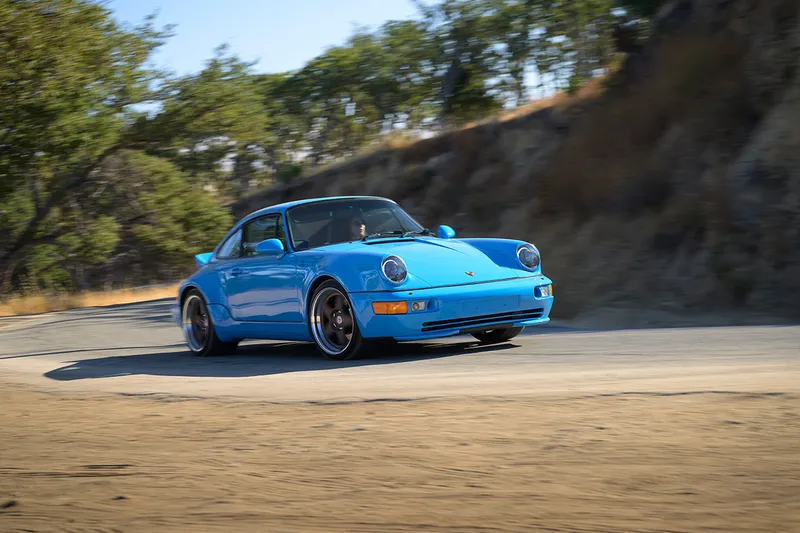
Berg’s history of the sector starts with Everrati’s first car, a Porsche 911 that used a Tesla motor and a single-speed transmission — a marker of that earlier generation of swaps. Everrati has since built out a wider programme of electric classics, including 911s, a Mercedes-Benz SL Pagoda, a Land Rover Series IIA, a Mini and a Superformance GT40, which are already on DriveMarket.
Electrogenic and the Lord Mayor’s Phantom
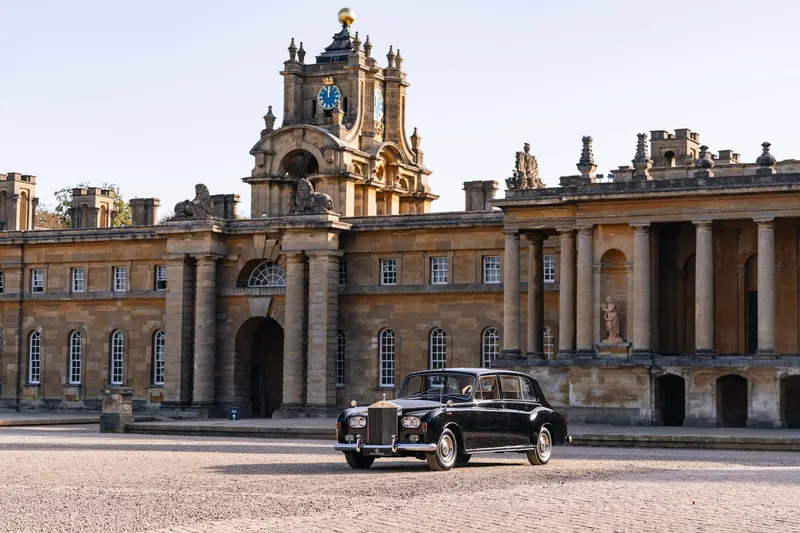
On the subject of money, Berg writes, the City of London recently commissioned Electrogenic to electrify the Lord Mayor’s 1973 Rolls-Royce Phantom limousine, reasoning that switching from oil to electrons would make fiscal sense. The Lord Mayor of the City of London, Bronek Masojada, is quoted: “The Rolls-Royces have been part of the City’s ceremonial life for generations. Rather than replace them, we have an opportunity to give them a new purpose, using modern technology to reduce their environmental impact while preserving their character. It is an imaginative and pragmatic solution that makes good financial sense. I hope it will also demonstrate that even our oldest institutions can find new ways of doing things, without losing what makes them special.”
Few cars are as ripe for electromodding as a Rolls-Royce, Berg suggests. He recalls that Charles Rolls, in an interview with The Motor-Car Journal in April 1900, said the electric car was “perfectly noiseless and clean,” with no smell or vibration, and “should become very useful when fixed charging stations can be arranged,” though he did not anticipate they would be very serviceable “at least for many years to come.”
That time has come, Berg writes: Rolls-Royce now makes the Spectre EV, and firms such as Evice and Lunaz have electrified historic Rolls-Royces. None, he says, have gone back further than Electrogenic, which converted a 1929 Phantom II for Jason Momoa as part of his On the Roam show — the same firm that also created an EV kit for a DeLorean. DriveMarket’s own page on the Lord Mayor’s Phantom VI conversion follows Electrogenic’s account of that commission.
A wider field
Berg also notes that OEMs have moved into the E-classic market, with Chevrolet’s eCrate and Ford’s Eluminator electric crate motors. It is even possible, he writes, to buy a completely new classic electric car: Britain’s RBW builds MGBs on new British Motor Heritage body shells with an EV powertrain, and Voltura is looking to remanufacture the Fiat 500 with electric power.
There is no stopping the charge to electrify cars of the past, he concludes — the niche has matured — but whether that is positive or negative is a very personal choice.
Currently available from Retroelectric
These cars were listed on Retroelectric’s showroom when this paragraph was added. All remain subject to the builder’s own availability.
- Electric 356 Speedster — a Limited Workshop Commission to electrify a Speedster replica, listed at £69,995 (the page also says available from £69,000).
- Reimagined Classic Mini Electric — a complete converted Mini from £39,995, with colour, trim and wheels still to choose.
- 1968 Porsche 912 Electric — converted by Retroelectric and offered on behalf of a customer; price on application, sold privately and not subject to VAT.
- 1302 VW Beetle Cabriolet Electric — metallic blue, 26 kWh, £35,000.
- 1972 VW Beetle Cabriolet Electric — metallic red, 32 kWh, £45,000.
- 1969 VW Beetle Electric — Racing Green, 26 kWh, £40,000.
- 2002 VW Beetle Electric — a Mexican Type 1 Beetle, 32 kWh, £45,000.
On DriveMarket
- Retroelectric builder page
- Everrati builder page
- Electrogenic builder page
- Electrogenic: the Lord Mayor’s Phantom VI
- Porsche 912 restomods
- Volkswagen Beetle restomods
Source
This is an own-words summary of “From Crashed Teslas to New-Build Classics: How the Electromod Market Has Surged Forward” by Nik Berg, published by Hagerty Media on 19 November 2026. All credit for the reporting belongs to the author and publication; please read the original for the full article. Photographs of Retroelectric cars are from Retroelectric; the Everrati and Electrogenic photographs are from those builders. Volkswagen, Beetle, Porsche, 911, 912, 356, Mercedes-Benz, Pagoda, Land Rover, Defender, Range Rover, Toyota, Land Cruiser, Mini, Fiat, MG, MGA and Rolls-Royce are trademarks of their respective owners and are used on DriveMarket for identification only. DriveMarket is not affiliated with Retroelectric, Everrati, Electrogenic, Hagerty or the trademark owners.
Model
Builders and sellers
For sale
Related stories
- Inverted Builds a 300hp Electric Porsche 912 for a Daily Driver
- Electrogenic Converts the Lord Mayor’s Rolls-Royce Phantom VI
- Classic Recreations Lists 2028 GT500CR Build Slots
- Thornley Kelham XK European GT: City AM Reviews the £750,000 Jaguar
- Karmenda Opens Orders for Three 356-Inspired Air-Cooled Kars
- Encor Series 1: the Remastered Lotus Esprit, and Build Slots for Q1 2028 Delivery