Builder Spotlight
Square Body Trucks: Complete 1973–1987 Chevy & GMC Guide
Explore the history, evolution, and lasting appeal of 1973–1987 GM Square Body trucks, plus what to know before buying, restoring, or re-engineering one.
- By
- Velocity Restorations
- Published
- October 21, 2026
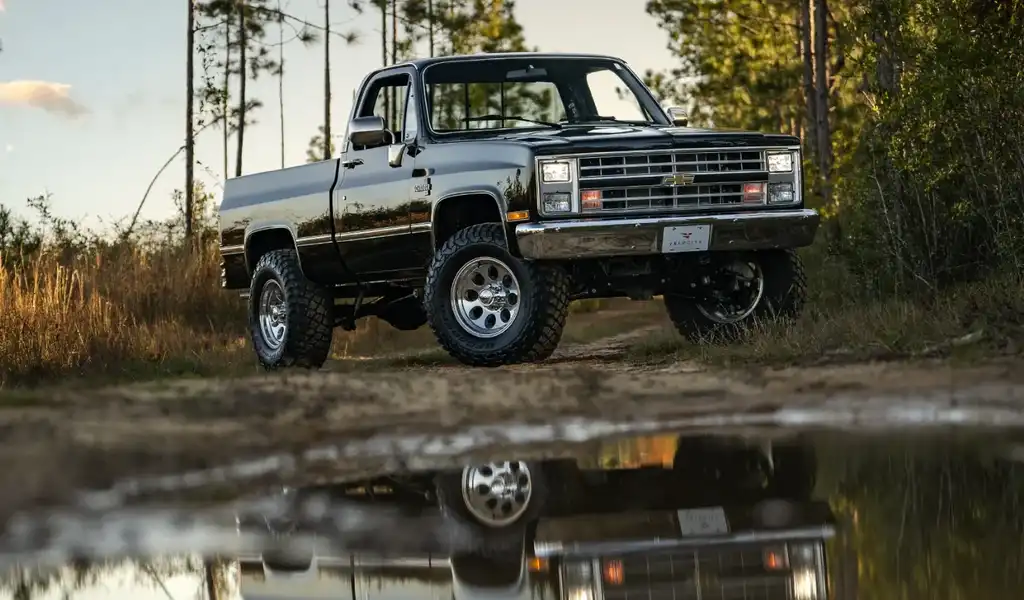
Discover why 1973–1987 GM Square Body trucks remain icons, blending timeless style, rugged capability, and endless potential for modern re-engineering.
For more than a decade, General Motors produced a generation of Chevrolet C/K trucks that would become some of the most recognizable classic Chevy trucks ever built. Known today as the Square Body generation, these 1973–1987 pickups have earned legendary status among collectors thanks to their timeless styling, mechanical simplicity, and exceptional potential for restoration or professional re-engineering.
Like other vehicles in the truck and SUV categories, vintage Square Bodies are also quite versatile. Not every collector is searching for another sports car or temperamental exotic. For many, a classic truck offers something far more rewarding: room for family and friends, everyday usability, and the unmistakable character of vintage American design.
The first step is research. GM’s Square Bodies were manufactured for a long enough period of time that there is variation among model years and notable differences between the early and later years of the production run. This matters because it can affect the ownership experience, cost to acquire, and potential for restoration or restomodding.
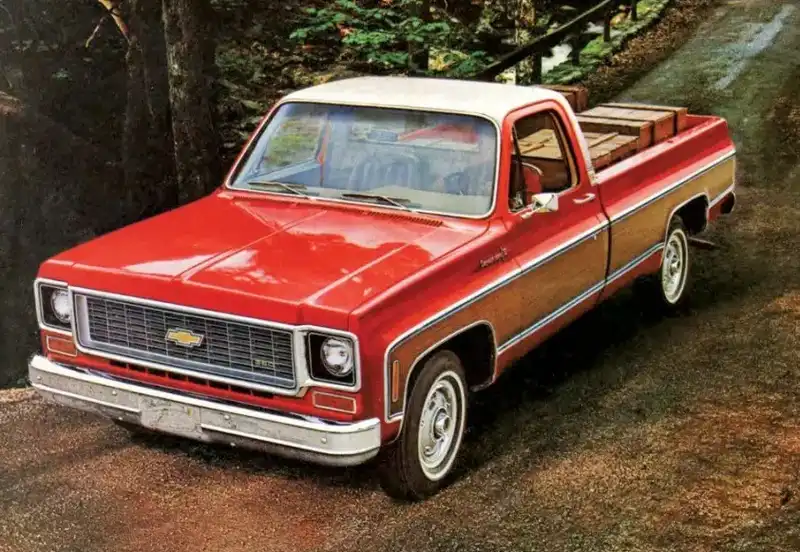
Over a million Square Body trucks sold in 1973 alone. Photo credit: General Motors.
The nickname "Square Body" refers to Chevrolet and GMC C/K pickup trucks built between 1973 and 1987. While General Motors never officially used the term, enthusiasts adopted it because of the trucks' clean, angular styling. This boxy look isn’t very aerodynamic, but in the early 1970s it came off as modern when the third-generation C/K series hit the streets.
The third-gen styling went far beyond sheet metal. GM engineers widened the frame, increased cabin space, improved ride quality, and enhanced visibility with larger windows and a lower beltline. Buyers who spent long days behind the wheel appreciated the more comfortable interior, while contractors and ranchers valued the trucks' durability and versatility. Those same qualities continue to attract collectors today.
As for the C/K designation, the "C" identified two-wheel-drive trucks, while "K" denoted four-wheel drive. The accompanying numbers indicated payload capacity, with C10 and K10 representing half-ton models, C20 and K20 serving the three-quarter-ton market, and C30 and K30 designed for heavy-duty applications.
Learn How We Build K10s
The Redesign That Changed GM Pickups
The 1973 Chevrolet C/K generation represented far more than a styling update. General Motors set out to build a truck that could work as hard as its predecessors while delivering a more comfortable, refined driving experience. Engineers widened the frame, lowered the cab floor, increased interior space, improved visibility, and refined the suspension to create a truck that was noticeably easier to drive every day.
Those changes marked a turning point in pickup design. Instead of serving exclusively as work vehicles, Square Body trucks began appealing to families, outdoor enthusiasts, and anyone looking for a vehicle that could transition seamlessly between the jobsite and the open road. That balance of capability and comfort remains one of the reasons these trucks continue to attract collectors more than fifty years later.
The Relationship Between Chevy and GMC
Prior to the first decades of this century, when GM started to streamline its roster of vehicles, many of the brands that were part of the “The General’s” holdings were built on the same platforms and were mechanically almost identical. Even though a wide range of trim levels were on sale for both Chevy and GMC, the underlying engineering of the C/K series trucks wasn’t all that different.
From the vintage standpoint, what distinguishes a Chevy from a GMC really comes down to styling details, interior offerings, and some options. Chevrolet models generally command greater collector interest today, thanks to stronger brand recognition and a larger enthusiast community.

The 1987 Square Body represents the pinnacle of the generation's evolution. Photo credit: General Motors.
One reason Square Body trucks have aged so well is that GM refined the platform continuously throughout its production run.
The 1973 model year was all about improved comfort, stability, and practicality, evolving the vehicles beyond what had been manufactured in the late 1960s and early 1970s. The new generation was still rugged, however, intended to appeal to owners who weren’t going to baby them. Think farmers, ranchers, and other customers who needed a truck to do hard work.
The timing of the Square Body's introduction also coincided with one of the most significant events in automotive history: the 1973 oil crisis. Rising fuel prices, stricter emissions regulations, and changing consumer expectations forced every manufacturer—including General Motors—to rethink engine performance and efficiency throughout the decade.
As a result, the Chevrolet C/K lineup evolved steadily during its production run. While early trucks emphasized straightforward V8 power and mechanical simplicity, later model years introduced refinements that improved emissions, drivability, and fuel delivery without fundamentally changing the truck's rugged character. Those continuous improvements are one reason buyers today often compare specific model years before choosing a truck for restoration or a Square Body restomod project.
Incremental improvements followed through the 1970s and into the early 1980s. Emissions systems were upgraded and interiors were improved, fuel injection came online and upgraded engine performance, and in 1981 a new grille refreshed the Square Bodies’ styling without making any other significant changes to that classic boxy
Engines included straight-six and V8 powerplants, while transmissions were available as either manuals or automatics. The engines earned a reputation for durability, and many remain popular among enthusiasts thanks to their simplicity and extensive aftermarket support.
But bear in mind that old motors are old motors, and the miles don’t lie. Fortunately, the relative mechanical simplicity of Square Body trucks means that engine-swaps are straightforward (although you want to work with a mechanic or builder who knows what they’re doing).
Model
Builders and sellers
Programs
For sale
Related stories
- Velocity’s Guaranteed Christmas Delivery on Available Inventory
- Top Gear Reviews the Velocity Ford Mustang Fox Body
- Velocity Restorations vs. Classic Ford Broncos: A Buyer’s Comparison
- 1967–1968 Ford Mustang: Fastback vs. Convertible
- What to Look For Before You Buy a First-Generation Chevrolet K5 Blazer
- International Scout Restoration: Why Velocity Builds the Ultimate Scout II Restomod