Builder Spotlight
Modern Classic vs Restomod vs Restoration: What’s the Difference?
Learn the difference between a restomod vs restoration vs Modern Classic, and how each approach changes the classic car rebuild process
- By
- Talia Maggi
- Published
- November 03, 2026
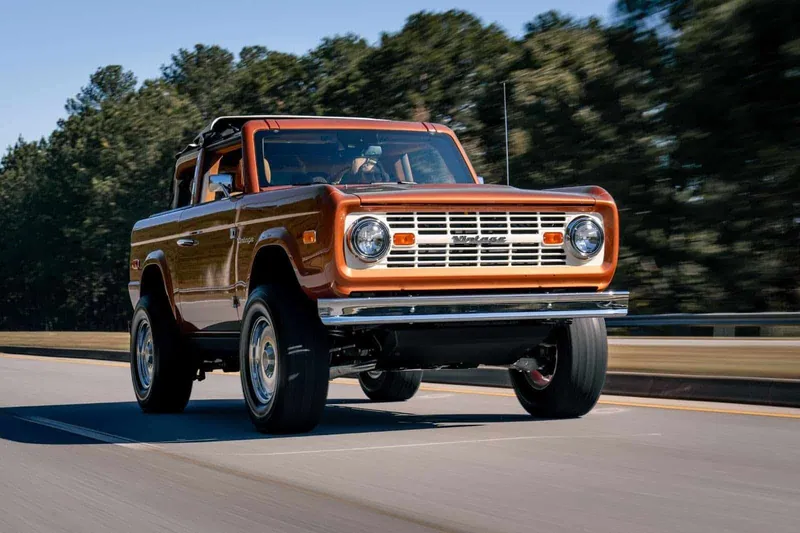
Restomod vs restoration is a question of intent. A restoration returns a vintage vehicle to the way it left the factory, using correct or period-accurate parts. A restomod (restoration plus modification) keeps the original look but replaces the mechanical and comfort systems with modern ones. A third option, the Modern Classic, skips the vintage vehicle entirely: it is a new build on a modern chassis designed to look like a 1960s classic.
This guide explains each approach, the vocabulary you will hear from builders, and the trade-offs in plain terms. If you have already done your research and are choosing what to buy, our companion page on restomods vs modern classics is written for that decision.
Restomod vs restoration at a glance
Restoration
Restomod
Modern Classic
Goal
Factory-original accuracy
Original look, modern function
Classic look, modern vehicle
Starting point
Original vintage vehicle
Original vintage vehicle
Modern chassis, brand-new steel body
Parts
Original, NOS or correct reproduction
Mix of original body and modern components
Modern components throughout
Drivetrain
Original type, rebuilt
Usually modern engine, transmission or both
Modern turbocharged engine, automatic
Safety equipment
As originally built
Depends on the builder
Six airbags, ABS, stability control and more
Judged on
Correctness and condition
Quality of engineering and finish
Design, build quality and ownership support
Typical use
Shows, events, occasional drives
Regular weekend use, some touring
Everyday driving and road trips
What is a restoration?
A restoration aims to return a vehicle to the condition it was in when new, or as close as the available parts allow. Paint colors, trim, upholstery patterns, engine components and even hose clamps are chosen to match how the vehicle was originally built.
Restorations are usually chosen by collectors and purists, and by owners who want to preserve a specific vehicle’s history. The reward is authenticity. The cost is that the vehicle keeps the performance, comfort and safety of its era.
How restorations are judged
Restorations are graded on correctness and condition. Hagerty’s condition scale runs from #1 “Concours,” a perfect, better-than-new vehicle rarely seen outside major concours events, to #2 “Excellent,” which Hagerty says describes the majority of fully restored vehicles, through #3 “Good” and #4 “Fair.” Knowing the scale helps you understand what a seller means by “show quality” or “driver quality.”
What a restoration typically includes
- Disassembly, often with the body removed from the frame (a “frame-off” restoration)
- Rust repair and bodywork to original panel shapes
- Paint in an original color, applied to period-correct standards
- Rebuilt original-type engine, transmission, brakes and suspension
- Upholstery, trim and badges matched to the original specification
The trade-offs of a restoration
A restored vehicle drives like a well-kept example of its era. That usually means manual or lightly assisted steering, brakes that need more distance, no airbags, and limited climate control. Parts can be hard to find, and some reproduction parts are of uneven quality. Owners typically drive restorations sparingly and store them carefully.
What is a restomod?
A restomod combines restoration and modification. The body keeps its classic shape, but the systems underneath are upgraded for performance, reliability and comfort. There is no single standard: one restomod might simply add disc brakes and fuel injection, while another replaces nearly every mechanical part.
So, what is a restomod in practice? It is a vintage vehicle that a builder has rebuilt to drive more like a modern one, within the limits of its original structure.
Common restomod upgrades
- Modern fuel-injected engine and automatic or overdrive transmission
- Disc brakes, often larger than original
- Power steering and upgraded suspension
- Air conditioning, modern wiring and LED lighting
- Digital gauges, Bluetooth audio and a modern infotainment head unit
- Custom upholstery and interior materials